How Does a Plumber Identify Hidden Plumbing Issues Inside Walls?
Plumbing issues inside walls often begin quietly, without a dramatic burst pipe or a flood on the floor. A homeowner may only notice a faint stain, a peeling patch of paint, a musty smell, or a water bill that no longer makes sense. Those early signs matter because water rarely stays in one place once it escapes. It can travel along framing, soak insulation, weaken drywall, and create damage far from the source. A plumber approaches these situations by looking beyond the visible symptom and asking what the wall is revealing indirectly. The goal is to locate the source with as little disruption as possible.
Why Hidden Plumbing Problems Matter
- How Clues Lead to the Source
A plumber usually starts with what can be seen, heard, and measured before opening anything up. Hidden plumbing problems leave patterns, and those patterns help narrow the search. A discolored patch on drywall may suggest an above-grade fitting, or downward from a fitting above. Bubbling paint can point to moisture trapped behind the finished wall surface. Warped baseboards, soft flooring near a wall, or recurring mildew smells can indicate water moving through a cavity over time. Even sound plays a part. A faint hiss behind a wall may suggest a pressurized supply leak, while an occasional drip may point toward a drain issue that only appears when a fixture is used. The plumber also pays attention to when the problem shows up. If staining grows after a shower runs, that points in one direction; if it appears even when no fixture is being used, the cause may be a constant supply line leak. Water meter behavior can provide another clue, especially if the meter keeps moving when all faucets are off. By combining these observations, a plumber creates a working theory before making any cuts, which helps reduce unnecessary damage and speeds up the repair process.
- Using Tools to Confirm What the Wall Is Hiding
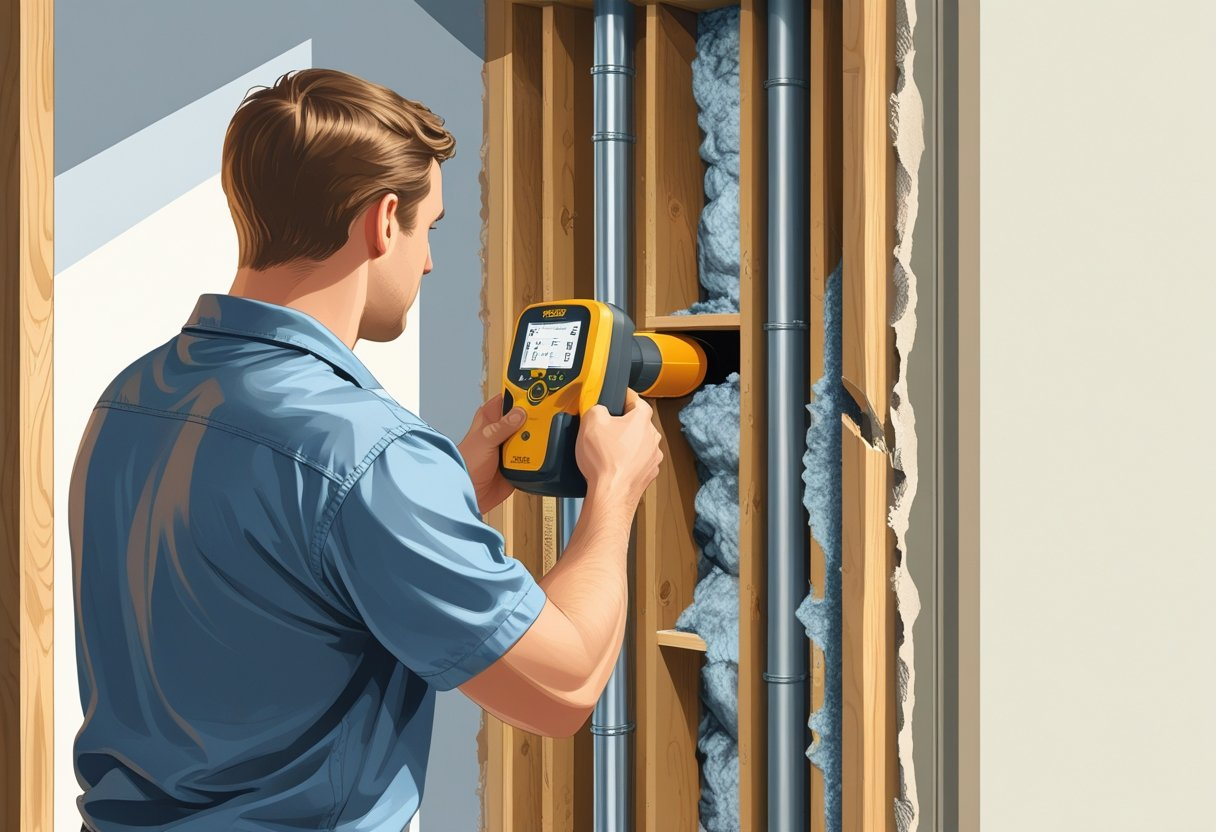
Once the visible clues are assessed, plumbers often turn to equipment that helps confirm whether moisture is present and where it is most concentrated. Moisture meters are commonly used to compare dry sections of wall with suspicious ones, helping identify how far water has spread. Infrared cameras can also be useful because temperature differences sometimes reveal damp areas that the eye cannot detect. A cooler patch on a wall may suggest moisture behind it, especially when compared to the surrounding material. In some cases, plumbers use a drain camera inspection to identify issues in waste lines when the concern appears linked to a recurring backup or a leak tied to a specific bathroom or kitchen fixture. Pressure testing may also be used to determine whether a supply line is losing water somewhere out of sight. A careful plumber does not rely on one clue alone but instead looks for agreement between several signs before opening the wall. For homeowners trying to understand how this process works before scheduling service, visiting this website can be a useful resource for additional company guidance or inspection details. The real value in this stage is precision, because finding the right section of wall to access can prevent a small repair from turning into a much larger restoration project.
- Distinguishing Leaks From Condensation and Other Problems
Not every wet wall is a plumber’s broken pipe, and part of a plumber’s job is separating actual plumbing failure from other sources of moisture. Condensation around cold-water lines, poorly sealed run-downs, roof leaks that run down, and even HVAC issues can all mimic plumbing trouble. That is why a plumber studies the location of fixtures, the path of drain and supply lines, and the timing of the symptoms before making a diagnosis. If moisture appears on an interior wall shared with a bathroom, the plumber may test the sink, toilet, and shower one at a time to see which one triggers the change. If the issue is near an exterior wall, outside factors may also be considered. A slow drain leak might only show up when water is running through the system, while a pinhole leak in a pressurized line may create constant dampness even when the house is quiet. Smells also help distinguish the source. Clean water leaks often leave little odor at first, while drain-related problems may bring a sour or sewer-like smell over time. By isolating each possible cause step by step, the plumber avoids guessing and targets the real issue rather than treating the wrong symptom.
Why Early Detection Changes Everything
Finding hidden plumbing issues inside walls is a process built on patience, evidence, and careful testing rather than guesswork. What looks like a simple stain can point to a larger pattern involving pressure loss, drain failure, trapped moisture, or water migration through structural spaces. A plumber reads those signs, confirms them with tools, and opens the wall only when there is a strong reason to do so. That careful method protects the home from extra damage and gives the repair a better chance of lasting. When hidden leaks are caught early, the outcome is usually simpler, cleaner, and less costly for everyone involved.