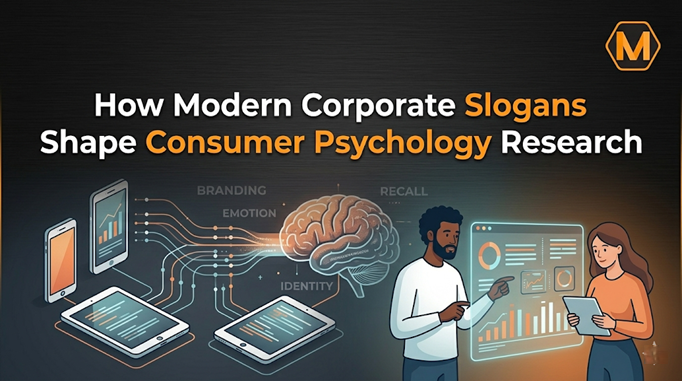
How Modern Corporate Slogans Shape Consumer Psychology Research
The landscape of modern business is no longer just about the products sitting on a shelf; it is about the psychological real estate a brand occupies in a consumer’s mind. For undergraduate students diving into marketing theory or behavioral economics, understanding the “slogan” is the first step in decoding how corporations influence human decision-making. A slogan isn’t just a catchy phrase; it is a condensed data point designed to trigger a specific emotional or cognitive response.
When students analyze market penetration, they often look at how a simple phrase can define a decade of commerce. A classic example is the evolution of the walmart slogan, which shifted from focusing on price to emphasizing a better quality of life—a key case study in consumer behavior courses. This transition from “Always Low Prices” to “Save Money. Live Better.” represents a sophisticated shift in consumer psychology research, moving from a purely functional appeal to a more aspirational one. By studying these shifts, researchers can map out how societal values—like the desire for wellness and time—supersede the basic need for affordability.
The Cognitive Architecture of a Phrase
In psychology, the “Fluency Effect” suggests that the easier a piece of information is to process, the more likely we are to believe it and trust the source. Corporate slogans are engineered for high processing fluency. Short, rhythmic, and repetitive phrases reduce “cognitive load,” allowing the brand to bypass a consumer’s critical filters. For a business student, researching this involves looking at “priming”—where a slogan prepares the brain to expect a certain experience before the product is even touched.
Research in this field often utilizes functional MRI (fMRI) scans to see which parts of the brain light up when exposed to iconic branding. It is rarely the logical centers that activate; instead, it is the limbic system, which governs emotions and memory. This is why a slogan like “Just Do It” doesn’t mention shoes—it mentions a feeling of agency and movement.
Bridging the Gap Between Theory and Application
The transition from reading about these theories in a textbook to applying them in a 3,000-word case study is where most undergraduates feel the pressure. The academic rigor required to dismantle a corporate strategy through the lens of psychological frameworks is intense. Many students find that utilizing specialized academic support frameworks helps them articulate these complex connections more clearly. For instance, when tasked with a deep-dive analysis into retail psychology, seeking do my assignment for me style guidance from experts at Myassignmenthelp allows students to see how professional researchers structure arguments regarding brand linguistics and consumer retention without getting lost in the technical jargon.
Integrating these high-level concepts into a cohesive paper requires a balance of data and narrative. It is about understanding that a slogan is the “hook,” but the consumer’s psychological journey is the “story.”
Comparative Analysis: Slogan Evolution and Psychological Intent
| Brand | Original Focus | Modern Slogan | Primary Psychological Trigger |
| Walmart | Functional (Price) | Save Money. Live Better. | Altruism & Quality of Life |
| Apple | Product Features | Think Different. | Self-Actualization & Identity |
| Nike | Athletic Performance | Just Do It. | Empowerment & Overcoming Procrastination |
| McDonald’s | Food Quality | I’m Lovin’ It. | Sensory Pleasure & Habit Formation |
Why “Information Gain” Matters in Marketing Research
In 2026, search engines and academic journals alike are looking for “Information Gain.” This means you cannot simply repeat what is in the textbook. You must find a new angle. For a business student, this might mean looking at how slogans are adapted for different cultures. A slogan that works in London might fail in Dubai because the underlying psychological “anchors” are different.
For example, individualistic cultures (like the UK or USA) respond well to slogans emphasizing personal “identity” and “uniqueness.” In contrast, collectivist cultures may respond more to slogans emphasizing “harmony,” “family,” or “community.” Researching these nuances requires a global tone and an understanding of cross-cultural psychology.
The Role of Semantics and Phonetics
It isn’t just what the words say, but how they sound. “Phonetic symbolism” is a field of research where scientists study how certain vowel sounds evoke feelings of size or speed. Brands often choose slogans with “plosive” consonants (P, B, T, D, K, G) to sound more powerful and memorable. When writing a thesis on this, students must look beyond the English language and see how these phonetic triggers translate—or fail to translate—in a globalized market.
Mastering the Research Methodology
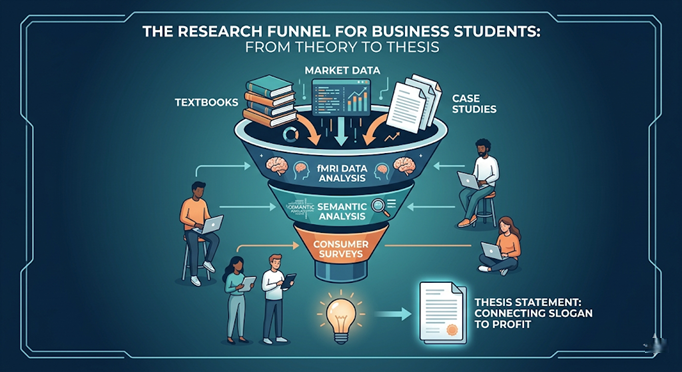
To rank high in your academic career and produce content that resonates globally, you must follow a strict research methodology:
- Literature Review: What do existing studies say about brand recall?
- Case Study Selection: Why choose a specific retail giant over another?
- Data Analysis: Using consumer surveys or social media sentiment analysis.
- Synthesis: Connecting the slogan to the bottom-line profit of the corporation.
Navigating the Future of Consumer Research
As we move further into a digital-first economy, slogans are becoming even shorter, sometimes disappearing entirely in favor of “sonic logos” (a specific sound or chime). However, the psychological root remains the same: the human brain craves shortcuts. Whether it is a three-word phrase or a two-second melody, the goal is to create a “mental shortcut” to trust.
For the modern student, staying ahead of these trends is the key to both academic success and future employability. Understanding the “why” behind the “what” is what separates a student who simply memorizes facts from one who masters the discipline of business psychology.
Frequently Asked Questions (FAQ)
Q: Why do slogans change over time?
Ans: Slogans change because consumer values evolve. While a brand might have started by selling “durability,” they may now need to sell “sustainability” or “experience” to stay relevant to younger generations.
Q: How does a slogan affect brand loyalty?
Ans: A slogan acts as a reinforcement. Every time a consumer hears it, it strengthens the neural pathways associated with that brand, making the choice to buy “automatic” rather than “calculated.”
Q: Is it better for a slogan to be funny or serious?
Ans: This depends on the product. “High-involvement” purchases (like insurance or medicine) usually benefit from serious, trust-based slogans. “Low-involvement” purchases (like snacks or soda) often use humor or rhythm to stay “top-of-mind.”
Q: How can I improve my research papers on consumer psychology?
Ans: Focus on peer-reviewed data and real-world examples. If the workload becomes overwhelming, using academic support services to structure your thoughts can provide a clearer path to a high-distinction grade.
About The Author
I’m Thomas Taylor, a dedicated academic researcher and content strategist with a focus on business management and consumer psychology. Over the years, I have developed a passion for helping students bridge the gap between complex theoretical frameworks and real-world corporate applications.