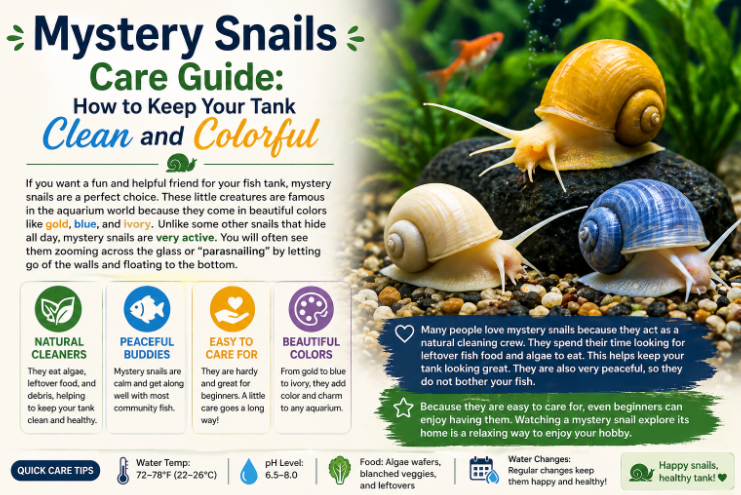
Mystery Snails Care Guide: How to Keep Your Tank Clean and Colorful
If you want a fun and helpful friend for your fish tank, mystery snails are a perfect choice. These little creatures are famous in the aquarium world because they come in beautiful colors like gold, blue, and ivory. Unlike some other snails that hide all day, mystery snails are very active. You will often see them zooming across the glass or “parasnailing” by letting go of the walls and floating to the bottom.
Many people love mystery snails because they act as a natural cleaning crew. They spend their time looking for leftover fish food and algae to eat. This helps keep your tank looking great. They are also very peaceful, so they do not bother your fish. Because they are easy to care for, even beginners can enjoy having them. Watching a mystery snail explore its home is a relaxing way to enjoy your hobby.
Quick Reference: Mystery Snail Care Chart
| Feature | Requirement |
| Tank Size | 5 to 10 gallons minimum |
| Water Temperature | 68°F to 84°F |
| pH Level | 7.0 to 8.4 (Alkaline is best) |
| Diet | Omnivore (Algae wafers, veggies, pellets) |
| Lifespan | 1 to 2 years |
| Maximum Size | About 2 inches |
| Temperament | Very Peaceful |
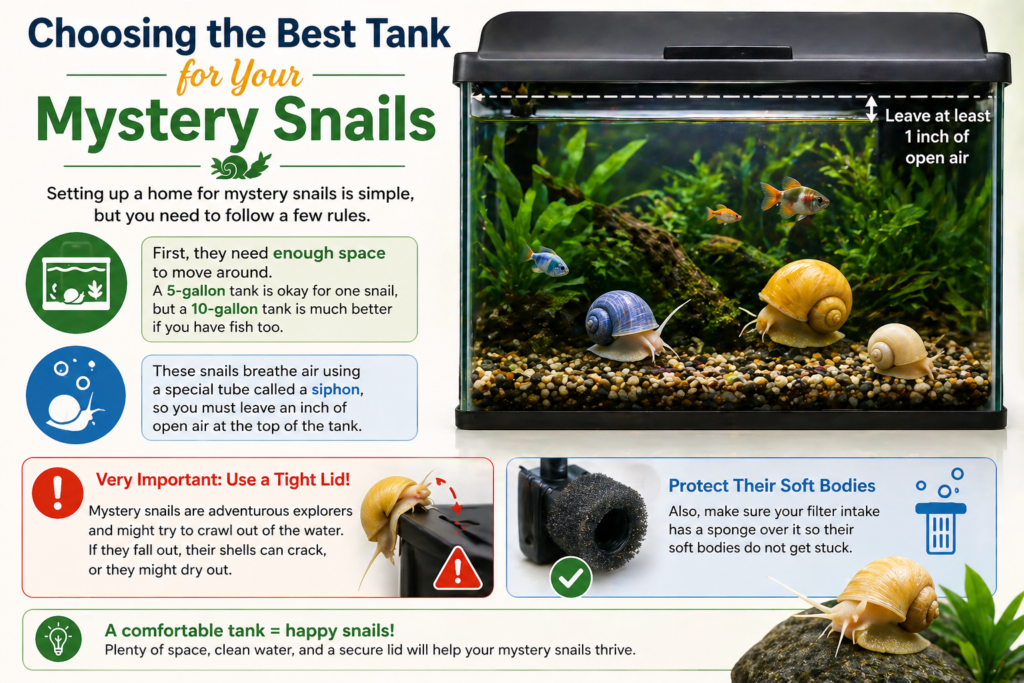
Choosing the Best Tank for Your Mystery Snails
Setting up a home for mystery snails is simple, but you need to follow a few rules. First, they need enough space to move around. A 5-gallon tank is okay for one snail, but a 10-gallon tank is much better if you have fish too. These snails breathe air using a special tube called a siphon, so you must leave an inch of open air at the top of the tank.
One very important tip is to use a tight lid. Mystery snails are adventurous explorers and might try to crawl out of the water. If they fall out, their shells can crack, or they might dry out. I always make sure my tank cover is secure to keep them safe. Also, make sure your filter intake has a sponge over it so their soft bodies do not get stuck.
Ideal Water Parameters for a Healthy Shell
The most important part of keeping mystery snails healthy is the water quality. They need “hard” water that is rich in calcium. Calcium is the building block for their shells. If the water is too acidic (low pH), their shells can get thin or develop small holes. I recommend keeping your pH above 7.0 to ensure they stay strong and shiny.
You should also keep the water clean by doing regular water changes. While mystery snails eat waste, they also produce their own. Ammonia and nitrites should always be at zero. If you notice your snail staying inside its shell for many days, check your water levels immediately. Keeping the temperature around 75°F is usually the “sweet spot” for active and happy snails.
What Do Mystery Snails Eat?
While mystery snails are great at eating algae, they cannot live on scraps alone. They are omnivores, which means they eat both plants and protein. To keep them healthy, you should offer them high-quality algae wafers and sinking pellets. I love feeding mine “snails” (homemade snail food) or blanched vegetables like zucchini, spinach, and carrots.
To feed them veggies, boil the greens for a minute until they are soft, let them cool, and drop them in. Watching a mystery snail munch on a piece of cucumber is actually quite funny! Remember to remove any uneaten food after 24 hours so it does not rot and ruin the water. Providing a variety of foods ensures they get all the vitamins they need to grow.
Understanding Mystery Snail Colors and Varieties
One of the best things about mystery snails is the variety of colors you can find. The most common one is the Golden Mystery Snail, which has a bright yellow shell. There are also Black, Blue, Ivory, and even Purple varieties. Some have stripes on their shells, while others are a solid, clean color. Their bodies can be dark or light with shimmering gold spots.
In my experience, mixing different colors makes the aquarium look like a moving rainbow. The colors do not change their behavior, but they definitely add a “wow” factor to your aquascape. When buying them, look for snails with smooth shells and no cracks. A healthy snail will usually be stuck to the glass or moving around rather than floating listlessly.
How to Tell if Your Mystery Snail is Happy
You can tell a lot about mystery snails by how they act. A happy snail will spend most of its day moving around and looking for food. They have long, sensitive tentacles that they use to feel their surroundings. If those tentacles are out and waving, your snail feels safe and comfortable in its environment.
If you see your snail tucked tightly into its shell for a long time, it might be stressed or the water might be cold. Sometimes they take “naps” at the bottom of the tank, which is normal. However, if they smell bad or do not move when touched, they may have passed away. Generally, if they are eating and exploring, you are doing a great job as a snail parent!
The Importance of Calcium for Shell Growth
Because mystery snails grow quite fast, they need a lot of calcium. Without it, their shells become brittle and can break easily. You can add calcium to the tank in a few easy ways. Many hobbyists put a piece of cuttlebone (found in the bird aisle) into the filter or directly in the tank. It will slowly dissolve and add minerals to the water.
You can also buy specialized snail flakes that have extra calcium built-in. I have noticed that snails with high-calcium diets have much thicker and more vibrant shells. If you see white patches or peeling on the shell, it is a sign you need to add more minerals right away. Think of calcium like a shield that protects your snail from the world.
Best Tank Mates for Your Snail Friends
Mystery snails are very peaceful and do not have any weapons to defend themselves. This means you must choose their roommates carefully. Good tank mates include small, calm fish like neon tetras, guppies, and corydoras. They also live very well with cherry shrimp. These neighbors will leave the snail alone and let it do its job.
Avoid aggressive fish like Cichlids, Goldfish, or Bettas that might nip at the snail’s long tentacles. If a fish bites their tentacles, the snail will stay hidden and might starve. Also, stay away from Assassin Snails, as they are known to eat other snails! Choosing calm friends ensures your mystery snails can live a long and stress-free life.
Mystery Snail Breeding: What to Expect
If you have a male and a female, you might find a pinkish clump of eggs above the waterline. Mystery snails are unique because they lay their eggs outside of the water. If you don’t want baby snails, you can easily remove the egg clutch and freeze it before throwing it away. If you do want babies, just leave the eggs alone and keep them moist.
After about two to four weeks, the tiny baby snails will crawl out and fall into the water. They are born with tiny shells and are ready to eat right away. Breeding mystery snails is a fun way to learn about life cycles. Just remember that a single egg clutch can have over 100 babies, so make sure you have enough space for everyone!
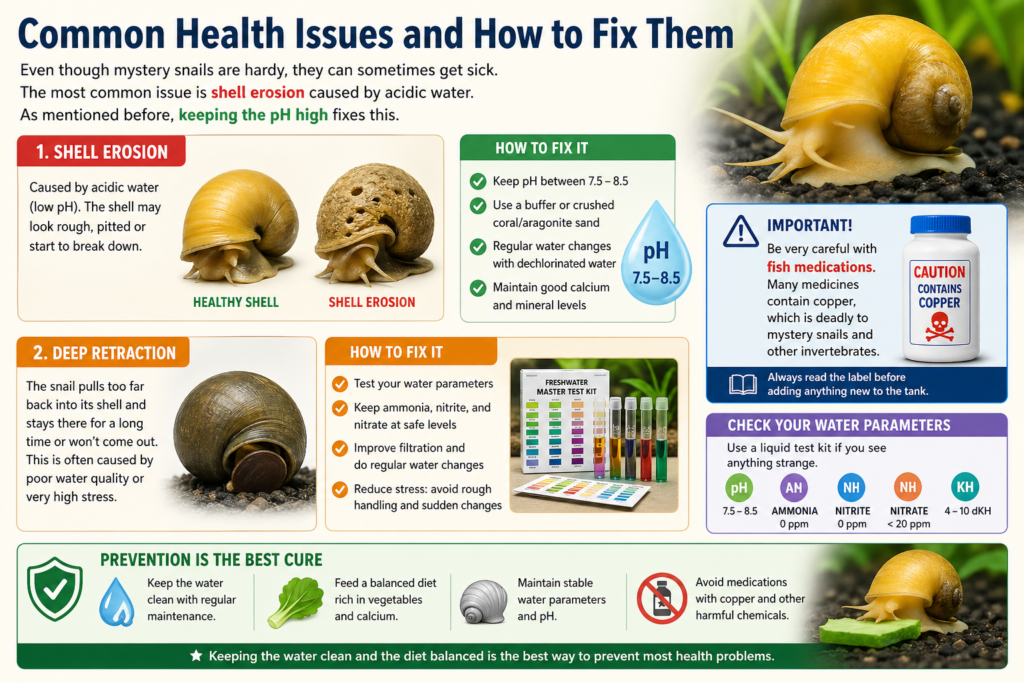
Common Health Issues and How to Fix Them
Even though mystery snails are hardy, they can sometimes get sick. The most common issue is shell erosion caused by acidic water. As mentioned before, keeping the pH high fixes this. Another issue is “deep retraction,” where the snail pulls too far back into its shell. This is often caused by poor water quality or very high stress.
Check your water parameters using a liquid test kit if you see anything strange. Also, be very careful with fish medications. Many medicines contain copper, which is deadly to mystery snails and other invertebrates. Always read the label before adding anything new to the tank. Keeping the water clean and the diet balanced is the best way to prevent most health problems.
Frequently Asked Questions
1. Do mystery snails eat live plants?
Generally, no. Mystery snails prefer dead plant matter and algae. If they are well-fed with wafers and veggies, they will leave your live aquarium plants alone.
2. How long do mystery snails live?
In a well-maintained tank, they usually live between 1 and 2 years. Their lifespan depends heavily on the water temperature and how much they eat.
3. Why is my mystery snail floating?
Sometimes they trap air in their shells to float to a new location. If the snail can pull itself back down or reacts when touched, it is likely just “parasnailing.”
4. How many mystery snails can I have in a 10-gallon tank?
A good rule is about 1 or 2 snails for every 5 gallons of water. This prevents the tank from getting too dirty from their waste.
5. Do they sleep?
Yes! They have irregular sleep cycles. They might be active for 2 days and then nap for several hours in a quiet corner or buried in the sand.
6. Can they live with Bettas?
It depends on the Betta’s personality. Some Bettas are calm, while others will nip the snail’s tentacles. Always watch them closely for the first few days.
Conclusion
In conclusion, mystery snails are a fantastic addition to almost any freshwater aquarium. They bring color, activity, and help with cleaning. By providing hard water, plenty of calcium, and a variety of food, you can ensure your snails live a happy life. They are fascinating to watch and very easy to keep once you know the basics.
If you are looking for a low-maintenance pet that adds personality to your tank, go get a mystery snail! Do you have a favorite color of snail? Let us know in the comments or share your own tips for snail care. Happy fish keeping!